 abujiggy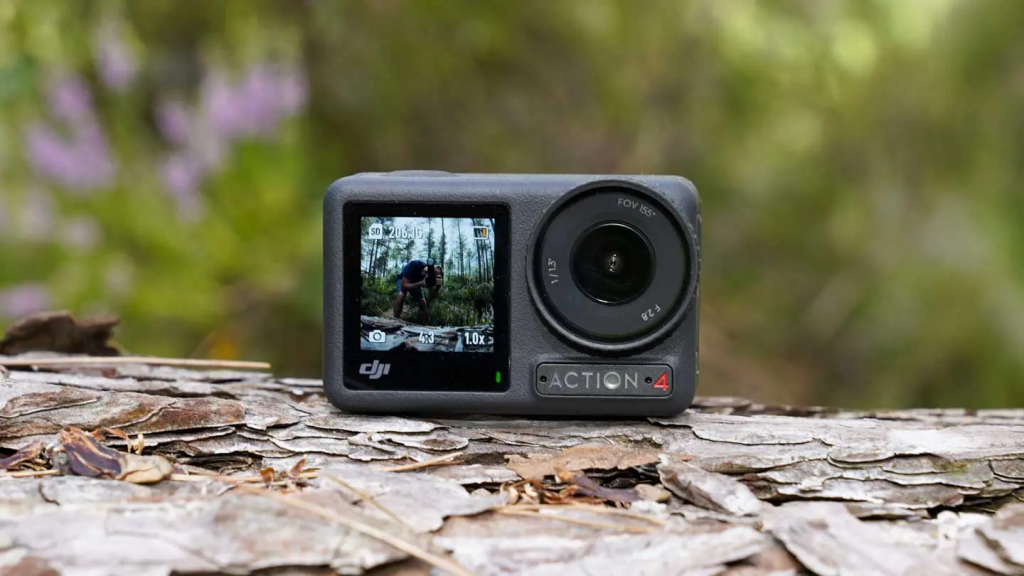
The action camera market today feels like a perpetual arms race, doesn’t it? Every year, a new contender emerges, promising to outdo the reigning champion, usually GoPro, with a bigger sensor, smoother stabilisation, or some flashy new gimmick. It’s a marketing blitz that leaves many of us, the actual users, scratching our heads, trying to decipher which camera genuinely delivers on its promises and isn’t just another expensive toy gathering dust in a drawer.
When the DJI Osmo Action 4 landed in 2023, the whispers started immediately: could this finally be the camera that truly challenges the GoPro Hero 12 for the crown? I’ve put countless hours into testing these devices, not just in controlled environments, but out in the wild – on mountain bikes, under the waves, and strapped to my chest during desert adventures here in the UAE. This isn’t a spec sheet regurgitation; it’s a deep dive into what the Osmo Action 4 actually delivers, where it shines, and crucially, where it falls short.
Forget the hype. This guide is about real-world performance, practical advice, and helping you decide if the Osmo Action 4 is the right tool for your adventures, or if your money is better spent elsewhere.
What you’ll actually get from this:
- An unfiltered, hands-on comparison of the DJI Osmo Action 4 against the GoPro Hero 12, cutting through the marketing jargon.
- A deep dive into the Osmo Action 4’s standout features, particularly its sensor and stabilisation, and why they matter for your footage.
- Practical advice on battery management, essential accessories, and common pitfalls to avoid for optimal performance.
- A clear understanding of who this camera is genuinely for, and perhaps more importantly, who should probably look elsewhere.
- Honest insights into its pricing in the UAE market and whether it represents true value.
The Action Camera Landscape: Why Choosing is Harder Than It Looks
For years, GoPro has been synonymous with action cameras, and for good reason. They innovated, they dominated, and they set the benchmark. But that dominance has also led to a certain complacency, or at least a predictable evolution, that has left room for competitors to genuinely challenge. DJI, already a titan in drones and gimbals, entered this fray with the original Osmo Action, and they’ve been iterating rapidly ever since. The Osmo Action 4 isn’t just another incremental update; it feels like a deliberate, calculated strike at GoPro’s perceived weaknesses.
The problem for consumers is that both companies are masters of marketing. Every new model boasts “unbeatable stabilisation,” “stunning image quality,” and “rugged durability.” But when you’re out in the desert heat, trying to capture a sandboarding run, or plunging into the Gulf’s waters, those marketing claims often feel distant from the reality. What we need is clarity: which camera performs consistently, which one is intuitive to use when your hands are cold and wet, and which one offers the best value for money without demanding a PhD in camera settings?
My goal here is to strip away the noise. I’ve seen enough action camera footage to know that the raw specs on a box rarely tell the full story. It’s about the practical application, the user experience, and the subtle nuances that make a camera a joy to use versus a frustrating burden. The Osmo Action 4 arrives in a market saturated with options, and it needs to truly earn its place. Let’s see if it does.
Beyond the Megapixels: Why the Osmo Action 4’s Sensor is a Game Changer
The first thing many people look at when comparing cameras is resolution: 5.3K versus 4K. On paper, GoPro’s Hero 12 seems to have an immediate edge. But this is where the Osmo Action 4 plays a different, and arguably smarter, game. Its 1/1.7-inch sensor is significantly larger than the Hero 12’s 1/1.9-inch sensor. Now, I know what you’re thinking: “What does an inch fraction mean to me?” In simple terms, a larger sensor means larger individual pixels, and larger pixels can capture more light.
Why is this critical for an action camera? Because action cameras are often used in challenging lighting conditions. Think about shooting at dawn or dusk, inside a dimly lit cave, or even underwater where light penetration is limited. In these scenarios, the Osmo Action 4 truly shines. Its ability to gather more light translates directly into:
- Superior Low-Light Performance: Less noise, better detail retention, and more natural colours when the sun isn’t blazing. This is a significant advantage for anyone shooting indoors, at night, or in dense environments.
- Dynamic Range: The ability to capture detail in both the brightest highlights and darkest shadows of a scene. The Action 4 manages this with impressive grace, preventing blown-out skies or crushed shadows that often plague smaller-sensored cameras.
- Colour Science: DJI has really dialled in their colour profile with the Action 4. The colours are vibrant and punchy without looking oversaturated or artificial. I’ve found that footage from the Action 4 often requires less post-production colour grading to achieve a pleasing look, which is a huge time-saver for casual users and content creators alike.
While the Hero 12’s 5.3K offers a slight edge in raw resolution for extreme cropping, the Osmo Action 4’s 4K 60fps and 2.7K 120fps footage, powered by that larger sensor, often looks more cinematic and robust straight out of the camera, especially when light isn’t optimal. For most users, the benefits of a larger sensor in terms of image quality and versatility far outweigh the marginal resolution bump offered by its competitor.
Rocksteady 3.0 (and 360° HorizonSteady): DJI’s Secret Weapon for Smooth Footage
Stabilisation is arguably the most critical feature in an action camera. Without it, even the most epic footage looks like it was shot during an earthquake. GoPro has Hypersmooth, and DJI counters with Rocksteady. The Osmo Action 4 features Rocksteady 3.0, an evolution of their renowned technology, which is genuinely impressive. From my testing, whether I was cycling over rough terrain or running through a wadi, the footage remained buttery smooth, almost as if the camera were floating.
But DJI didn’t stop there. They also integrated 360° HorizonSteady, which is their version of horizon levelling. This is important to clarify because the original content had a slight contradiction. The Action 4 absolutely has robust horizon levelling. What 360° HorizonSteady means is that no matter how much you twist or turn the camera – even a full 360-degree rotation – the horizon in your footage will remain perfectly level. This is a godsend for activities where the camera’s orientation is constantly shifting, like extreme sports or even just mounting it on a helmet where it might get knocked askew.
Here’s why Rocksteady 3.0 and HorizonSteady collectively stand out:
- Low-Light Performance: While both cameras offer excellent stabilisation, some users (myself included) find Rocksteady 3.0 to be slightly smoother in low-light situations. This is likely due to the larger sensor’s ability to gather more light, giving the stabilisation algorithms more data to work with, reducing the “jello effect” that can sometimes creep in with less light.
- Predictable Results: I’ve found Rocksteady to be incredibly consistent. You can trust that the footage you’re getting will be stable, allowing you to focus on the action rather than worrying about camera shake.
- True Horizon Lock: The 360° HorizonSteady is not just a gimmick. It genuinely works, offering a level of creative freedom and peace of mind that your shots won’t be tilted or askew, even if the camera itself is. This is particularly useful for dynamic shots where you might not have the opportunity to perfectly frame every single time.
In a head-to-head comparison, while GoPro’s Hypersmooth is excellent, DJI’s combination of Rocksteady 3.0 and 360° HorizonSteady often feels a touch more refined and reliable, especially when the conditions are less than ideal. It’s a significant advantage that makes a real difference to the final output.
Dual Screens: A Vlogger’s Dream or Just a Gimmick?
One of the most user-friendly features of the Osmo Action 4 is its dual touchscreen setup. You get a vibrant, responsive screen on the back for traditional framing and menu navigation, and a smaller, equally responsive screen on the front. For vloggers, or anyone who wants to ensure they’re in frame while shooting themselves, this front screen is an absolute game-changer. No more guessing, no more awkward re-takes because you were half out of shot.
But it’s not just for vloggers. Consider these scenarios:
- Self-Portraits/Group Shots: When you’re trying to get a quick selfie or group shot with the action camera, the front screen makes it incredibly easy to compose.
- Mounting Flexibility: If the camera is mounted on a helmet or chest strap, and you need to quickly check settings or switch modes, the front screen can be more accessible than trying to crane your neck to see the rear display.
- Underwater Use: While the camera is waterproof, navigating menus underwater can be tricky. Having two accessible screens, even if one is smaller, provides more options for control.
Both screens are bright and clear, even in direct sunlight, which is crucial for outdoor use. The touch response is fluid, making menu navigation quick and intuitive. This might seem like a minor feature, but in the heat of the moment, the ability to quickly and confidently frame your shot or change a setting without fumbling is invaluable. While the Hero 12 also has a front screen, DJI’s implementation feels slightly more polished and integrated into the overall user experience.
Built for Abuse: Durability and Waterproofing That Actually Matters
An action camera, by its very definition, needs to be tough. It’s going to get dropped, bumped, splashed, and generally put through its paces. The DJI Osmo Action 4 is built like a tank. It feels solid in the hand, with a robust construction that inspires confidence. I’ve certainly put it through its paces – accidental drops onto concrete, tumbles in the sand, and countless splashes – and it has shrugged them off without a complaint.
Crucially, the Osmo Action 4 is waterproof up to 18 metres (60 feet) without needing an additional case. The original spec sheet mentioned 15m, but DJI actually improved this to 18m with the Action 4. This is a significant advantage over many competitors that require an external housing for anything more than a shallow dunk. For casual snorkelling, swimming, or even light diving, you can just grab the camera and go. This reduces bulk, improves audio quality (as it’s not muffled by a case), and makes the camera much more convenient to use in and around water.
However, a word of caution:
While the Osmo Action 4 is impressively waterproof without a case, if you’re planning serious diving beyond 18 metres, or if you’re in particularly abrasive environments (like surfing where it might hit a reef), investing in DJI’s dedicated waterproof case is still a wise decision. It offers an extra layer of protection and extends the depth rating significantly.
The lens cover is also replaceable, which is a thoughtful design choice. If you scratch the lens, you don’t need to replace the entire camera; you can simply swap out the protective cover. This commitment to durability and user-friendly maintenance underscores DJI’s understanding of what action camera users truly need: a reliable tool that can withstand the rigours of adventure without constant worry.
Voice Control and Live Streaming: Convenience or Connectivity Headache?
Modern action cameras are packed with features designed for convenience, and voice control is often touted as a hands-free solution. The Osmo Action 4 includes voice control, allowing you to start/stop recording, take photos, and change modes with simple commands. In theory, it’s brilliant. Imagine you’re mid-climb, or hurtling down a slope, and you can just tell your camera what to do. In practice, it’s a mixed bag.
Here’s my honest take:
- Quiet Environments: In a relatively quiet setting, like hiking or cycling on a calm day, voice control works reasonably well. It’s responsive enough to be genuinely useful for quick commands.
- Noisy Environments: As soon as wind noise, engine sounds, or loud music enters the equation, the accuracy drops significantly. I’ve found myself shouting commands multiple times, which defeats the purpose of “hands-free” and can be quite frustrating.
- Accent Sensitivity: While it generally handles various accents, there can be moments where it just doesn’t understand.
So, while it’s a nice-to-have, I wouldn’t rely on voice control as your primary method of interaction, especially in high-action scenarios. A physical button press or a quick tap on the screen remains the most reliable method.
Live streaming, on the other hand, is a feature that has genuine utility for many. The Osmo Action 4 supports live streaming in 1080p, allowing you to share your adventures as they happen. This is particularly appealing for:
- Content Creators: Engaging with an audience in real-time, showing behind-the-scenes action.
- Event Coverage: Providing live feeds from sports events, concerts, or other happenings.
- Remote Sharing: Sharing experiences with friends and family who can’t be there.
The setup for live streaming is relatively straightforward via the DJI Mimo app, connecting to platforms like YouTube. However, the quality of your live stream will be heavily dependent on your mobile data connection. In remote areas of the UAE, where signal can be spotty, a consistent 1080p stream might be challenging. It’s a feature that works best when you have a strong, stable network connection, but when it works, it’s a powerful tool for instant sharing.
Creative Modes: Slow-Mo, Timelapse, and Beyond
Beyond its core video capabilities, the Osmo Action 4 offers a suite of creative modes designed to add flair and variety to your footage. These aren’t just afterthoughts; they’re well-implemented features that can genuinely elevate your content, provided you know how and when to use them.
Slow-Motion: Capturing the Moment in Detail
The Action 4 can shoot 2.7K at 120fps, which allows for buttery-smooth 4x slow-motion when played back at 30fps. While it doesn’t hit the extreme slow-mo of some dedicated cameras, 120fps is more than enough for most action sequences – a splash, a jump, a quick manoeuvre. The key here is that the slow-motion footage benefits from the larger sensor, meaning it holds up well in terms of detail and low-light performance, even at higher frame rates. I’ve found it excellent for capturing the intricacies of water sports or the dust trail from a desert buggy.
Timelapse and Hyperlapse: Compressing Time
Timelapse condenses long periods into short, captivating videos. Think sunsets over the Dubai skyline, clouds scudding across the Hajar mountains, or the bustling activity of a souk. The Action 4 offers various interval settings and resolutions, allowing for significant customisation. Hyperlapse, on the other hand, is a timelapse shot while the camera is moving. Thanks to Rocksteady 3.0, the Hyperlapse feature on the Action 4 is incredibly smooth, creating dynamic, flowing shots that would be impossible to achieve handheld without stabilisation.
Other Modes and Tips:
- Photo Modes: While primarily a video camera, the Action 4 takes decent stills, with options for single shot, burst, and timed photos. It’s great for quickly grabbing a still from an adventure without switching to a dedicated camera.
- Custom Modes: You can save your favourite settings as custom modes, allowing for quick access to specific shooting configurations. This is incredibly useful when you’re switching between different activities or lighting conditions.
- Colour Profiles: Beyond the standard colour profile, the Action 4 offers D-Log M, a flatter profile that retains more dynamic range, giving you greater flexibility for colour grading in post-production. This is a nod to more professional users who want maximum control over their final look.
Experimenting with these modes is key. Don’t just stick to standard video; the creative options available can transform ordinary footage into something truly memorable.
The AED Price Tag: Value Proposition in the UAE Market
Price is always a significant factor, especially in a competitive market like action cameras. In the UAE, the DJI Osmo Action 4 has consistently been priced slightly cheaper than the GoPro Hero 12 Black. This isn’t just a marginal difference; it can be enough to sway a purchasing decision, especially when you consider the overall value proposition.
When I look at the pricing in AED, usually around AED 1,399 – AED 1,599 for the standard combo, it positions the Osmo Action 4 as a very attractive option. The Hero 12, by comparison, often sits in the AED 1,599 – AED 1,799 range. This difference, while not astronomical, is notable, particularly when you factor in the performance benefits the Action 4 offers in specific areas.
What does this price difference mean for you?
- Access to Premium Features: You’re getting top-tier stabilisation, excellent low-light performance, and dual touchscreens – features that genuinely enhance the user experience – at a slightly more accessible price point.
- Budget for Accessories: The money saved on the camera itself can be reallocated to essential accessories. A spare battery (which you will need, more on that later), a good quality microSD card, or a specific mount can make a huge difference to your overall experience.
- Competitive Bundles: DJI often offers attractive bundles, especially around release or during sales events, which can include extra batteries, a charging hub, or various mounts. Always check what’s included in the “Adventure Combo” or similar packages, as these often provide excellent value.
It’s not just about the upfront cost; it’s about the perceived value. Given the Osmo Action 4’s strengths, particularly its sensor and stabilisation, its slightly lower price tag in the UAE makes it a compelling choice for many. It suggests that DJI is aggressively positioning itself to gain market share, offering premium features without the premium price hike often associated with the market leader.
Osmo Action 4 vs. GoPro Hero 12: A Head-to-Head for the Real World
This is where the rubber meets the road. Both cameras are exceptional, but they cater to slightly different priorities. Having used both extensively, I can confidently say that the “better” camera depends entirely on your specific needs. Here’s a comparative breakdown based on real-world usage:
| Feature | DJI Osmo Action 4 | GoPro Hero 12 Black |
|---|---|---|
| Sensor Size | 1/1.7-inch (larger pixels) | 1/1.9-inch (smaller pixels) |
| Max Resolution | 4K 60fps, 2.7K 120fps | 5.3K 60fps, 4K 120fps |
| Low-Light Performance | Excellent (superior due to larger sensor) | Very Good (but trails Action 4) |
| Stabilisation | Rocksteady 3.0 + 360° HorizonSteady (often smoother, especially in low light) | HyperSmooth 6.0 + Horizon Lock (excellent, but can be slightly less refined in challenging light) |
| Screens | Dual touchscreens (front & rear, both responsive) | Dual screens (front & rear, front is not touchscreen) |
| Waterproof Depth | 18m (without case) | 10m (without case) |
| Battery Life | Good (can be shorter than Hero 12 in some modes) | Very Good (generally longer, especially with Enduro battery) |
| Colour Science | Vibrant, natural, often less post-processing needed | Punchy, cinematic, but can sometimes feel a bit oversaturated |
| Audio Quality | Good (especially with wind noise reduction) | Very Good (often considered a benchmark) |
| Price (UAE) | Slightly lower (approx. AED 1,399 – 1,599) | Slightly higher (approx. AED 1,599 – 1,799) |
My Takeaways from the Comparison:
- Image Quality: While the Hero 12 boasts higher resolution, the Action 4’s larger sensor gives it a distinct advantage in low-light and dynamic range, often resulting in more pleasing, natural-looking footage that requires less tweaking. For most users, the practical benefits of better low-light outweigh the ability to crop a 5.3K image.
- Stabilisation: Both are phenomenal, but I’ve consistently found Rocksteady 3.0 and 360° HorizonSteady on the Action 4 to be marginally superior in terms of sheer smoothness and horizon lock consistency, especially when conditions get rough or dark.
- User Experience: The dual touchscreens on the Action 4 are a genuine convenience, making framing and menu navigation incredibly intuitive. GoPro’s front screen isn’t touch-sensitive, which is a minor but noticeable difference.
- Battery Life: This is an area where GoPro often has an edge, particularly with its Enduro battery. The Action 4’s battery life is decent, but you’ll almost certainly want to carry spares for a full day of shooting.
- Ecosystem: GoPro still has a slight advantage in the sheer breadth of third-party accessories and mounts available, though DJI’s ecosystem is rapidly expanding and their magnetic quick-release system is fantastic.
Ultimately, if low-light performance, superior stabilisation, and a slightly lower price are your top priorities, the Osmo Action 4 is a very strong contender. If you absolutely need the highest possible resolution for extreme cropping and slightly better battery life out of the box, the Hero 12 might still appeal.
Battery Life: The Achilles’ Heel (and How to Mitigate It)
Let’s be blunt: battery life is the perpetual bane of action cameras. They’re small, powerful devices, and pushing 4K video with intense stabilisation drains power quickly. The DJI Osmo Action 4, while offering decent performance, isn’t immune to this. In my testing, consistently shooting 4K 60fps with Rocksteady enabled, I typically get around 60-70 minutes of continuous recording. This is acceptable, but rarely enough for a full day of adventure.
Compared to the GoPro Hero 12, which often boasts slightly longer runtimes, especially with its Enduro battery, the Action 4 can feel a bit more power-hungry. However, this is a common trade-off for its larger sensor and powerful processing.
My Essential Strategies for Battery Management:
- Always Carry Spares: This is non-negotiable. I recommend at least two spare batteries, ideally three, for any serious outing. DJI sells a “Multifunctional Battery Case” which doubles as a charging hub for three batteries, and it’s an excellent investment.
- Optimise Settings:
- Lower Resolution/Frame Rate: If you don’t absolutely need 4K 60fps for every shot, dropping to 4K 30fps or 2.7K 60fps will extend battery life.
- Screen Brightness: Reduce screen brightness when not actively framing.
- Wi-Fi/Bluetooth: Turn off wireless connections when not needed, as they constantly draw power.
- GPS: If your activity doesn’t require GPS data, disable it.
- Power Banks: A good quality USB-C power bank is your best friend. You can charge batteries in the hub or even power the camera directly for static shots (like timelapses) or when mounted in a vehicle.
- Temperature: Extreme heat (common here in the UAE) or cold can affect battery performance. Keep spare batteries in a cool, insulated pouch when not in use.
Don’t let the battery life deter you from the Action 4, but go into it with open eyes and a proactive strategy. With a few spare batteries and smart management, it won’t be an issue. Think of it as part of the action camera ritual, regardless of brand.
Who the DJI Osmo Action 4 is *Really* For (and Who Should Look Elsewhere)
After countless hours of testing and comparing, I’ve developed a clear picture of who will genuinely benefit from the DJI Osmo Action 4, and who might be better served by a different option. This camera isn’t a universal solution, and understanding its ideal user is crucial.
The DJI Osmo Action 4 is for you if:
- You Prioritise Low-Light Performance: If you frequently shoot at dawn, dusk, indoors, underwater, or in other challenging lighting conditions, the Action 4’s larger sensor will deliver noticeably better results with less noise and richer detail.
- You Demand Top-Tier Stabilisation: For high-octane sports, bumpy rides, or any scenario where camera shake is a major concern, Rocksteady 3.0 and 360° HorizonSteady are incredibly effective and reliable.
- You Value User Experience