 abujiggy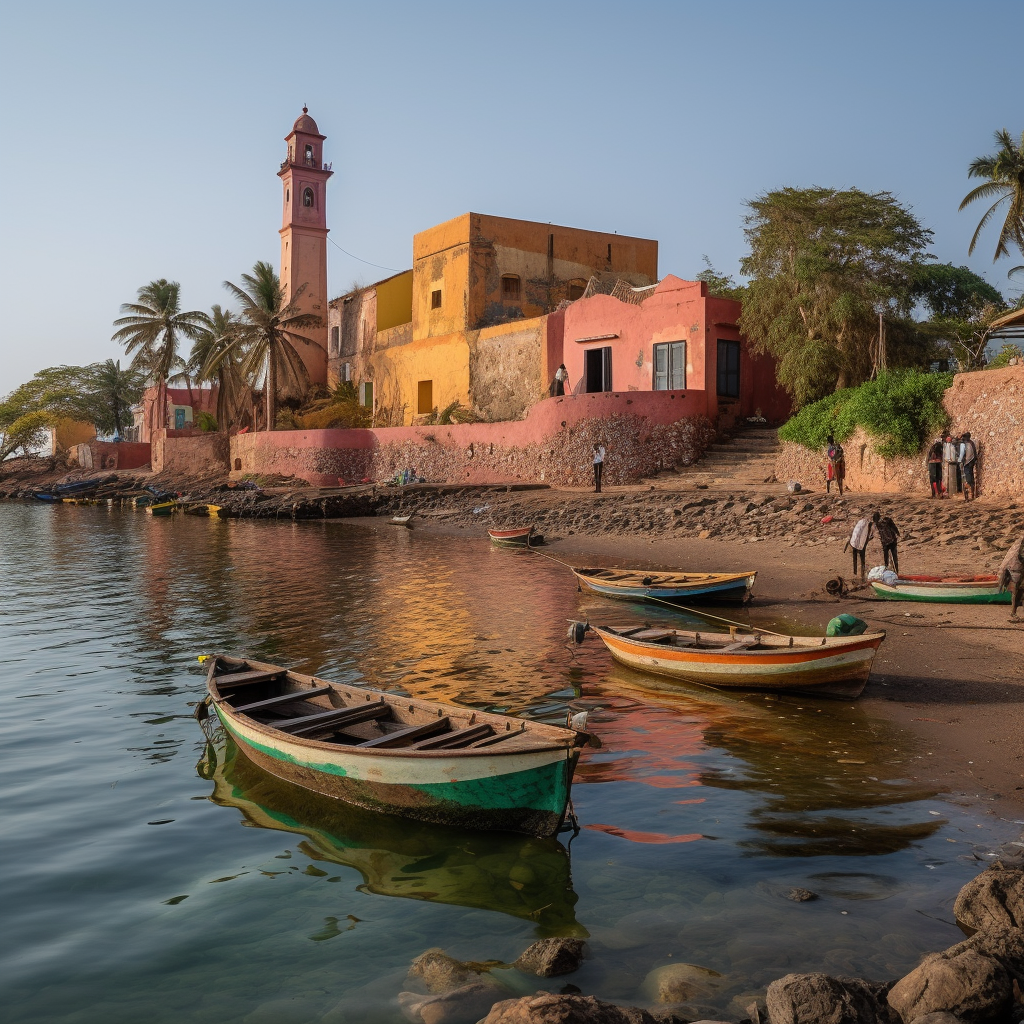
Most heritage sites let you observe history from a comfortable distance—through glass cases, velvet ropes, and sanitised narratives. Gorée Island doesn’t offer that luxury. This 28-hectare speck of volcanic rock off Dakar’s coast forces you to confront one of humanity’s darkest chapters whilst standing in the exact spots where it unfolded. After spending three days exploring the island and speaking with local historians, I can tell you this isn’t your typical UNESCO World Heritage site visit.
The challenge isn’t just the emotional weight—it’s navigating the mix of authentic historical preservation, tourist infrastructure, and ongoing local life that makes Gorée both powerful and occasionally overwhelming for first-time visitors.
What you’ll actually get from this guide:
- Practical logistics for the 20-minute ferry journey and what to expect on arrival
- How to approach the House of Slaves without falling for common misconceptions
- Which historical sites deserve your time and which you can skip
- Where to eat and what local crafts are worth buying (and which aren’t)
- Realistic timing for a day trip versus overnight stay options
Getting There: Ferry Logistics and Timing
The ferry from Dakar’s main port runs roughly every hour during daylight, costing around 5,200 CFA francs (about £7) for a return ticket. Here’s what the guidebooks don’t tell you: the published schedule is more of a suggestion than a commitment. I’ve waited 90 minutes for a boat that was supposed to leave in 30.
Your best bet is the 8:30 AM departure—it’s the most reliable and gets you to the island before the tour groups descend around 10 AM. The last return ferry typically leaves Gorée around 6 PM, but I’ve seen it delayed until past 7 PM during busy periods. Don’t cut it too close if you have evening plans in Dakar.
The crossing itself takes 20 minutes in good weather, longer when the Atlantic gets choppy. Sit on the right side of the boat for your first glimpse of Gorée’s distinctive colonial architecture rising from the water. The boat docks at a small pier where you’ll immediately notice the absence of cars—the entire island is pedestrian-only.
“I always tell visitors to bring more water than they think they need. The island has limited shade, and the emotional intensity of the sites can be physically draining in ways you don’t expect.” — Amadou Dieng, local guide
The House of Slaves: Beyond the Tourism Mythology
Let’s address the elephant in the room: the House of Slaves (Maison des Esclaves) is simultaneously the island’s most important site and its most mythologised. The building itself is authentic—a late 18th-century slave house owned by the Péan family. But some of the narratives you’ll encounter need context.
The famous “Door of No Return” is real, but it wasn’t necessarily the final exit for millions of enslaved people as sometimes claimed. Historians estimate that while Gorée was indeed a significant slave trading post, the vast majority of the estimated 12-15 million Africans shipped to the Americas departed from other West African ports.
That doesn’t diminish the house’s power as a memorial. The cramped holding cells, the central courtyard where families were separated, and yes, that doorway facing the Atlantic—they’re all authentic remnants of an actual slave-holding facility. The museum displays original shackles, bills of sale, and personal accounts that contextualise the broader slave trade.
Entry costs 500 CFA francs (about 70p). Visit early morning or late afternoon to avoid the crowds that make the already-small rooms feel claustrophobic. The guided tours in French provide more historical detail than the English versions, though both tend toward the dramatic rather than the purely academic.
IFAN Historical Museum: The Academic Counterpoint
While the House of Slaves handles the emotional impact, the IFAN Historical Museum (in the old French fort) provides the scholarly framework you need to understand Gorée’s place in the broader slave trade network. The museum’s collection includes maps showing trade routes, economic data on the volume of human trafficking, and crucially, information about resistance and rebellion.
The exhibits on pre-colonial West African societies are particularly valuable—they counter the narrative that Europeans encountered “primitive” peoples by showcasing sophisticated political systems, trade networks, and artistic traditions. Entry is 1,000 CFA francs and worth every centime if you’re serious about understanding the historical context.
The museum’s weakness is its limited labelling in English. Hire a local guide (expect to pay 10,000-15,000 CFA francs for 2-3 hours) or download the UNESCO World Heritage app beforehand for additional context.
Colonial Architecture: What’s Original and What’s Not
Gorée’s streetscape is undeniably photogenic—pastel-coloured colonial buildings with wooden balconies, bougainvillea cascading over ochre walls, narrow cobblestone streets that dead-end at the Atlantic. But like many heritage sites, what you’re seeing is a mix of authentic preservation and careful reconstruction.
The most authentic structures include:
- The House of Slaves and adjacent slave merchants’ houses
- The French colonial government buildings (now housing the IFAN Museum)
- St. Charles Borromeo Church, built in 1830
- Several private residences along Rue du Port
Much of the decorative paintwork is recent—Gorée has been continuously inhabited, and residents maintain their homes in period-appropriate colours rather than letting them decay for “authenticity.” The result is more visually striking than many colonial sites, though purists sometimes complain it’s too pretty.
For photography, the best light hits the main street around 4 PM, when the western-facing buildings glow without harsh shadows. The view from the fort’s ramparts offers the classic overview shot, but it’s also where every tour group stops.
Local Art Scene: Craft Quality and Tourist Traps
Gorée’s art market occupies a complex space between authentic cultural expression and tourist-focused production. You’ll find everything from mass-produced “African” masks made in China to genuinely skilled local artisans working in traditional media.
The reliable purchases include:
- Textile work: Hand-woven fabrics and traditional clothing from local artisans. Look for uneven edges and slight colour variations that indicate handwork.
- Paintings: Several island residents are accomplished painters. Cheikh Diouf’s historical scenes and Aminata Diallo’s contemporary portraits are particularly noteworthy.
- Wood carvings: Smaller items like letter openers and decorative bowls travel well and showcase genuine craftsmanship.
Avoid the generic “African art” that looks identical across multiple stalls—it’s mass-produced elsewhere. Prices are negotiable but not aggressively so. A handwoven cloth that starts at 25,000 CFA francs might come down to 18,000, but don’t expect the dramatic haggling you’d find in Marrakech.
| Item Type | Fair Price Range (CFA francs) | Quality Indicators |
|---|---|---|
| Small wood carving | 2,000-8,000 | Tool marks visible, wood grain shows through |
| Hand-woven textile | 15,000-40,000 | Slight irregularities, natural dye variations |
| Original painting | 20,000-100,000 | Artist’s signature, unique composition |
| Traditional clothing | 25,000-75,000 | Hand-finished seams, quality fabric |
Dining Options: Limited but Authentic
Gorée’s restaurant scene reflects its small size and tourist-focused economy. You won’t find haute cuisine, but you will encounter solid Senegalese home cooking at prices that won’t break the bank.
Chez Kesso remains the most reliable option—family-run, cash-only, with a short menu that changes based on what’s available. Their thieboudienne (Senegal’s national dish of fish and rice) costs around 3,500 CFA francs and actually tastes like what locals eat rather than a tourist-friendly version. The terrace offers harbour views, but the interior stays cooler during midday heat.
Restaurant La Chaumière targets the tour group crowd with a more extensive menu and higher prices (expect 5,000-8,000 CFA francs for main courses). The food is competent rather than exceptional, but they handle larger groups efficiently and offer vegetarian options beyond rice and vegetables.
For snacks, several small shops sell fresh fruit, bottled water, and basic provisions. Prices are higher than mainland Dakar but not outrageously so. A large bottle of water runs about 800 CFA francs versus 500 in the city.
The Castel: Military History Beyond the Slave Trade
While most visitors focus on Gorée’s role in the slave trade, the island’s strategic position made it a contested military asset for centuries. The Castel—a fortress built by the Portuguese, expanded by the Dutch, and completed by the French—tells that broader story.
The fort’s cannon emplacements still face the Atlantic, and the underground chambers that once stored gunpowder now house exhibits on the various European powers that controlled the island. The French held it longest (1677-1960 with brief interruptions), but the Dutch and British periods left their marks in architectural details and fortification styles.
The climb to the fort’s highest point is steep but manageable for most visitors. The 360-degree view encompasses Dakar’s skyline, the Cape Verde Peninsula, and the Atlantic shipping lanes that made Gorée strategically valuable. Entry is included in the general site ticket, but bring sun protection—there’s minimal shade once you’re above the tree line.
Practical Considerations: Weather, Timing, and Expectations
Gorée’s location 3.5 kilometres offshore moderates Dakar’s heat, but “moderate” is relative. December through February offers the most comfortable temperatures (mid-20s Celsius) and lowest rainfall. March through May gets progressively hotter, while June through November brings the rainy season and higher humidity.
A day trip allows you to see the main sites without rushing, assuming you catch the 8:30 AM ferry. Plan on:
- House of Slaves: 60-90 minutes including queue time
- IFAN Museum: 45-60 minutes
- Castel fortress: 30-45 minutes
- Lunch and shopping: 90 minutes
- Walking the streets and taking photos: 60 minutes
That puts you back at the dock for a 4 PM or 5 PM return ferry, leaving buffer time for delays. Trying to cram everything into a shorter visit leaves you feeling rushed through sites that deserve contemplation.
Overnight accommodation exists—the Hostellerie du Chevalier de Boufflers offers period atmosphere in a former colonial mansion—but most visitors find a day trip sufficient unless they’re conducting serious research or want to experience the island after the day-trippers leave.
Photography Ethics and Restrictions
Photography on Gorée requires more sensitivity than your typical heritage site visit. Inside the House of Slaves, flash photography is prohibited, and many visitors find it inappropriate to take selfies in the holding cells or at the Door of No Return. The museum staff don’t actively police this, but consider the context.
For street photography, most locals are accustomed to tourists but appreciate being asked permission, especially for close-up portraits. The children who sometimes approach visitors aren’t necessarily looking for money—many are genuinely curious about foreigners—but offering small amounts (500-1,000 CFA francs) for posed photos is acceptable.
The best architectural shots happen during the golden hour before sunset, but the last ferry departure limits your timing. If photography is a priority, consider the overnight option or plan for multiple day trips during different seasons.
Modern Gorée: Living Heritage Versus Museum Piece
One aspect that surprises first-time visitors is that Gorée isn’t a preserved historical site—it’s a functioning community of about 1,200 residents. Children walk to school past former slave quarters, fishermen repair nets in the shadow of the fort, and families hang laundry on balconies that overlook sites of historical trauma.
This living heritage approach creates some jarring juxtapositions. Modern electrical cables snake across colonial facades. Satellite dishes sit atop 18th-century rooflines. The local primary school operates in a building that once housed slave merchants.
Some preservationists argue this dilutes the historical experience, but I found it added depth. Gorée isn’t a monument to the past—it’s a place where people have continuously lived, worked, and built community despite and because of its complicated history. That resilience is part of the story too.
Educational Programs and Research Opportunities
Beyond casual tourism, Gorée serves as a research centre and educational hub for African diaspora studies. The island hosts regular academic conferences, artist residencies, and cultural exchange programs that go deeper than a typical heritage site visit.
UNESCO’s Associated Schools Project Network runs educational programs for students from across West Africa, combining historical study with contemporary discussions about racism, human rights, and cultural identity. If you’re visiting with students or have academic interests, contact the island’s cultural centre in advance—they sometimes allow visitors to audit lectures or participate in workshops.
The island’s archives contain original documents related to the slave trade, colonial administration, and resistance movements. Serious researchers can arrange access through the IFAN research division, though this requires advance planning and appropriate academic credentials.
Common Mistakes to Avoid
- Treating it like a regular sightseeing trip: Gorée deals with heavy historical themes. Come prepared for an emotionally challenging experience, not a lighthearted day out.
- Believing everything tour guides tell you: Some guides embellish stories for dramatic effect. The basic historical facts are solid, but treat specific numbers and individual anecdotes with healthy skepticism.
- Rushing between sites: The island’s small size tempts visitors to tick off every location quickly. Take time to absorb what you’re seeing—the impact comes from contemplation, not completion.
- Ignoring the living community: Don’t treat residents as part of the historical display. They’re people going about their daily lives, not museum exhibits.
- Bringing too little cash: Card payments are rare. Bring enough CFA francs for ferry tickets, entry fees, meals, and purchases—ATMs don’t exist on the island.
- Wearing inappropriate clothing: While not strictly enforced, covering shoulders and knees shows respect for the sites’ significance and local sensibilities.
Frequently Asked Questions
Is Gorée Island safe for solo travellers?
Yes, the island is very safe with minimal crime and a visible security presence. The main risks are sunburn, dehydration, and missing the last ferry back to Dakar. Solo female travellers report no significant harassment beyond occasional attempts to sell crafts or guide services.
Can I visit Gorée with young children?
Physically, yes—the island is pedestrian-friendly and compact. Emotionally, it depends on the children’s maturity and your family’s approach to discussing difficult historical topics. The House of Slaves can be intense for sensitive children under 10.
How much French do I need to speak?
Basic French helps significantly, especially for interacting with local artisans and accessing the more detailed museum information. However, many guides speak English, and the main historical sites have English signage. You can navigate the island with minimal French if necessary.
What’s the best time of year to visit?
December through March offers the most comfortable weather and clearest Atlantic views. April and May are hotter but less crowded. Avoid June through September unless you don’t mind high humidity and potential rain delays for the ferry.
Should I book accommodation on the island or stay in Dakar?
For most visitors, staying in Dakar offers more dining and accommodation options while keeping Gorée as a day trip. Overnight island stays make sense if you want to experience the evening atmosphere, conduct research, or have mobility issues that make rushed day trips difficult.
Are there any sites related to resistance and rebellion?
The IFAN Museum includes exhibits on resistance movements and escaped slaves, though this aspect receives less attention than the trade itself. Local guides can point out locations associated with rebellion attempts, but these stories are often passed down orally rather than formally documented.
Key Takeaways
- Plan for an emotionally intensive experience that goes beyond typical heritage tourism—this isn’t a casual sightseeing trip
- Catch the early ferry to avoid crowds and ensure return options, bringing plenty of cash for all expenses
- The House of Slaves provides emotional impact while the IFAN Museum offers essential historical context—you need both for complete understanding
- Local artisans produce genuine quality work alongside tourist-focused items—learn to distinguish between them
- Gorée functions as a living community, not a preserved museum, which adds depth but requires cultural sensitivity
- A day trip allows you to see everything significant without rushing, though overnight stays offer different perspectives
- Weather and ferry schedules significantly impact the experience—plan accordingly and build in buffer time
Gorée Island earned its UNESCO status not just for preserved buildings but for its role in forcing uncomfortable conversations about humanity’s capacity for both cruelty and resilience. It’s a place that changes how you think about history, memory, and the ongoing impact of past injustices—which is exactly why it’s worth the journey from Dakar’s mainland.