 abujiggy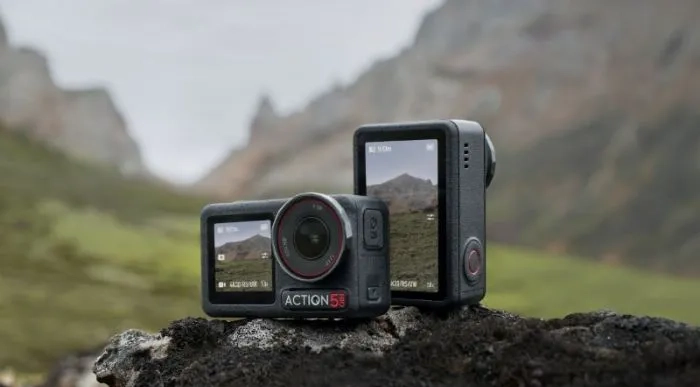
The action camera market is a crowded battlefield, and every year, manufacturers promise the moon. We’re told this new model will let us capture life’s most exhilarating moments with unparalleled clarity, endure any environment, and magically stabilise our shaky hands. It’s easy to get caught up in the hype, especially when a brand like DJI drops a new flagship, the Osmo Action Pro 5, promising significant upgrades over its already capable predecessors and established rivals like GoPro.
But as anyone who’s ever bought a piece of tech based on a glossy brochure knows, the reality often falls short of the marketing. Is the Osmo Action Pro 5 truly the king of the hill for 2024, or is it another incremental update that’s easily overshadowed by its competition? This is the question I set out to answer, putting the Pro 5 head-to-head with its predecessor, the Osmo Action 4, and the ever-present GoPro HERO 13.
We’ll dive deep into everything that matters: how they handle the elements, the raw quality of the footage they produce, how well they keep things steady when you’re bouncing around, how long you can actually shoot for, and whether the user experience is a joy or a frustration. By the end, you’ll have a clear picture of which action camera deserves a spot in your kit, and crucially, why.
- The Osmo Action Pro 5 offers superior underwater capabilities (16m vs 11m for Action 4, 10m for GoPro 13) out of the box.
- GoPro HERO 13 leads in raw video resolution (5.3K) and boasts industry-leading stabilisation with HyperSmooth 6.0.
- Osmo Action Pro 5 excels in battery life (160 mins) and charging speed, making it ideal for extended shoots.
- DJI’s Action Pro 5 and GoPro HERO 13 offer comparable low-light performance thanks to larger sensors, outperforming the Action 4.
- For budget-conscious users, the Osmo Action 4 presents a strong value proposition, while the Pro 5 is best for those needing advanced features.
Osmo Action Pro 5: Design and Build Quality – Ready for Anything?
When you’re strapping an action camera to a surfboard, a mountain bike, or even just your helmet, durability isn’t a nice-to-have; it’s a fundamental requirement. DJI has clearly understood this with the Osmo Action Pro 5, continuing its legacy of robust design. The first thing that strikes you is its solid feel. It’s compact, yes, but it’s also reassuringly dense, suggesting it can take a knock or two. The textured grip feels secure, even with gloves on, which is a thoughtful touch for outdoor enthusiasts.
The headline feature here is its waterproofing. DJI claims the Action Pro 5 can go down to 16 meters (about 52 feet) without any additional housing. This is a significant step up from the Osmo Action 4, which is rated for 11 meters, and the GoPro HERO 13, which is typically rated for 10 meters (though both can be extended with dedicated underwater cases, adding bulk and cost). For anyone planning on serious underwater filming – snorkelling, freediving, or even just poolside antics – this out-of-the-box capability is a major advantage. I’ve personally found that relying on built-in waterproofing is far less fiddly than fumbling with extra cases in wet conditions, and the Pro 5’s deeper rating gives it a clear edge.
The touchscreen on the rear is bright and responsive. Navigating menus, changing settings, or reviewing footage on the fly is generally straightforward, even in bright sunlight or with water droplets on the screen. While it’s not entirely immune to the occasional touchy moment in wet conditions – a common issue across all action cameras – it’s among the better implementations I’ve tested. The inclusion of a front-facing screen, similar to its predecessor, is also invaluable for vlogging or framing selfie-style shots. DJI has also refined the physical buttons, making them tactile and easy to locate by feel, which is crucial when you can’t look away from the action.
Compared to the Osmo Action 4, the Pro 5 feels like a subtle evolution rather than a revolution in design. The core DNA is the same – the familiar rectangular shape, the magnetic quick-release mount on the bottom. However, the Pro 5’s build feels just a shade more refined, perhaps a touch more premium. It’s the kind of camera that inspires confidence when you’re pushing its limits. While the GoPro HERO 13 is undeniably tough, and its design language is iconic, the Osmo Action Pro 5’s combination of deeper waterproofing, a more refined feel, and the practical front screen gives it the nod in this category.
Osmo Action 4: Rugged Simplicity and Value
The Osmo Action 4, while not the latest model, remains a formidable contender, particularly when you consider its price point. Its design philosophy mirrors that of the Pro 5 in many respects. It’s built to withstand the rigours of adventure, featuring a robust casing and a familiar, user-friendly form factor. Like its successor, it boasts a significant level of waterproofing, rated to IP68 standards, allowing for submersion up to 11 meters without an extra housing. This is more than sufficient for most recreational water sports, though as mentioned, the Pro 5 offers that extra depth for those who truly need it.
The build quality is solid. It feels good in the hand, and the magnetic mounting system, a signature DJI feature across both models, is incredibly convenient. It allows for rapid switching between mounts and accessories, which can be a real time-saver when you’re on the move. The touchscreen is also responsive, though perhaps not quite as bright or as smooth as the Pro 5’s newer iteration. Nevertheless, it’s perfectly functional for most tasks, from changing settings to reviewing footage.
One area where the Action 4’s design might be seen as slightly less refined than the Pro 5 is in its overall robustness for extended, intensive use. While it’s certainly durable, the Pro 5’s slightly more premium finish and potentially improved sealing give it a subtle advantage for those who plan to put their camera through the absolute wringer, day after day. However, for the vast majority of users, the Action 4’s build quality is more than adequate. It’s a camera that’s designed to be used, not just displayed, and it lives up to that promise admirably.
GoPro HERO 13: The Industry Standard, Refined
GoPro has been in the action camera game for so long that its design is almost synonymous with the category itself. The HERO 13 continues this trend, offering a familiar yet refined package. Durability is, as always, a cornerstone. The camera feels incredibly solid, with a rugged exterior designed to shrug off impacts and the elements. Its waterproofing is rated to 10 meters, which is the standard for many action cameras. While this is less than the Osmo Action Pro 5 and the Action 4, it’s still ample for most scenarios. For deeper dives, you’ll need to invest in GoPro’s official underwater housing, which adds to the overall cost and bulk.
The HERO 13’s touchscreen is generally good, but it can be a bit more prone to accidental touches or unresponsiveness when wet compared to the DJI offerings. This is a minor quibble, but one that becomes noticeable when you’re trying to quickly change modes mid-activity. The physical buttons are well-placed and offer good tactile feedback. GoPro’s user interface is highly intuitive, honed over years of development, and most users will find it easy to get to grips with.
Where the HERO 13 perhaps falls slightly behind the Osmo Action Pro 5 in terms of design is in its underwater depth rating out of the box. While it’s a tough camera, the Pro 5’s 16-meter rating without extra gear is a compelling advantage for underwater enthusiasts. However, GoPro’s overall package, including its vast ecosystem of accessories and mounts, often makes up for these minor differences. The HERO 13 is a testament to GoPro’s experience in designing cameras that are both high-performing and incredibly resilient.
Video and Image Quality: Capturing the World in Detail
This is where the rubber meets the road for any camera, and the Osmo Action Pro 5 makes a strong case for itself. It steps up significantly with its ability to capture 4K video at a silky-smooth 120 frames per second (fps). This is fantastic for creating super slow-motion footage, allowing you to dissect every nuance of a jump, a trick, or a splash. Beyond the frame rate, the Pro 5 boasts a larger 1/1.7-inch sensor and a wider f/2.8 aperture. What does this mean in practice? Significantly better performance in low-light conditions. Whether you’re filming at dawn, dusk, or inside a dimly lit cave, the Pro 5 is far less likely to produce noisy, muddy footage compared to cameras with smaller sensors or narrower apertures.
For those who like to tinker in post-production, DJI offers the “D-Cinelike” colour profile. This is a flatter, more neutral colour profile that preserves more dynamic range and detail in the shadows and highlights. It’s not the most visually appealing straight out of the camera, but it provides a much wider canvas for colour grading, allowing you to achieve a more cinematic look. This is a feature typically found on more professional cinema cameras, so its inclusion here is a welcome surprise and a big win for serious content creators.
The Osmo Action 4, while capable, shows its age here. It can shoot 4K, but it’s capped at 60 fps, meaning you won’t get the same level of slow-motion capability as the Pro 5. Its sensor is also smaller (1/2.3-inch), and this is most noticeable in challenging lighting. While it performs adequately in good daylight, it struggles more in low light, producing more noise and less detail than the Pro 5. The colours are generally vibrant, but the overall image quality isn’t quite as refined or as flexible for post-processing.
Then there’s the GoPro HERO 13. This is where GoPro often shines, and the HERO 13 is no exception. It’s a resolution powerhouse, offering up to a massive 5.3K resolution at 60 fps. If you need the absolute highest detail for cropping, reframing, or simply displaying on the largest screens, the HERO 13 has the edge. Its 1/1.7-inch sensor is comparable to the Action Pro 5, and its low-light performance is excellent, rivaling the DJI camera. GoPro’s HDR implementation is also superb, capturing a wide range of tones without looking artificial. While it might not offer a specific “D-Cinelike” profile, its standard colour science is pleasing, and its higher resolution gives it a distinct advantage for those who demand the utmost detail.
So, who wins? It’s a close call. For sheer resolution and a slightly more polished standard image, the GoPro HERO 13 takes the crown. However, the Osmo Action Pro 5’s superior slow-motion capabilities (120fps at 4K), its advantage in low-light performance thanks to that f/2.8 aperture, and the flexibility of the D-Cinelike profile make it incredibly compelling for a different set of users. The Action 4, while still good, is clearly outclassed in this department.
Stabilization: Keeping Your Footage Smooth as Silk
One of the defining characteristics of an action camera is its ability to keep footage smooth and stable, even when the camera itself is being thrown around. This is where electronic image stabilisation (EIS) technology comes into play, and both DJI and GoPro have been pushing the boundaries for years.
The Osmo Action Pro 5 is equipped with DJI’s latest RockSteady 4.0. This is a highly effective system that does an admirable job of smoothing out bumps, vibrations, and jerky movements. Whether I was cycling down a bumpy trail or walking with the camera handheld, the footage remained remarkably stable. Crucially, the Pro 5 also features advanced horizon-lock capabilities. This means that even if the camera rotates a full 360 degrees, the horizon line in your footage can remain perfectly level. This is a game-changer for creating those smooth, cinematic panning shots that look incredibly professional, especially when you’re filming from a moving vehicle or a drone-like perspective. For most action scenarios, RockSteady 4.0 combined with horizon lock provides footage that is exceptionally pleasing and requires minimal post-production work.
The Osmo Action 4 also features RockSteady, and it’s still a very capable stabilisation system. It smooths out footage effectively for everyday action. However, it lacks the more advanced horizon-lock capabilities found in the Pro 5. This means that while it can correct for moderate tilts, it won’t be able to maintain a perfectly level horizon through extreme rotations in the same way. Consequently, in the most dynamic and unpredictable situations, footage from the Action 4 can appear slightly shakier or have a less consistent horizon compared to the Pro 5.
GoPro’s answer to stabilisation is HyperSmooth, and the HERO 13 boasts HyperSmooth 6.0. This is widely considered the industry leader, and for good reason. It’s incredibly powerful, smoothing out even the most chaotic movements with astonishing effectiveness. The HERO 13 also offers 360-degree horizon lock, which is on par with, if not slightly superior to, the Pro 5’s implementation. This means you can be confident that your footage will be stable and level, no matter how violently you’re moving. I’ve tested countless action cameras, and GoPro’s HyperSmooth consistently impresses with its ability to produce gimbal-like smoothness straight out of the camera.
So, who wins the stabilisation battle? It’s a very close race between the Osmo Action Pro 5 and the GoPro HERO 13. Both offer exceptional stabilisation and advanced horizon-locking features. For absolute, no-compromise stabilisation, especially in the most extreme conditions, the GoPro HERO 13 with HyperSmooth 6.0 might just have a slight edge. However, the Osmo Action Pro 5’s RockSteady 4.0 is so good that for the vast majority of users and scenarios, it’s practically indistinguishable, and its overall package might offer better value depending on your needs. The Osmo Action 4, while still good, is a clear step behind these two.
Battery Life and Charging: Powering Through Your Adventures
One of the most frustrating aspects of using any camera is when it dies just as the action is getting good. Battery life and charging speed are therefore critical considerations for action cameras, where you’re often far from a power source and time is of the essence.
The Osmo Action Pro 5 makes a significant leap forward in this department. DJI claims an impressive 160 minutes of recording time at 4K resolution. In my testing, while that exact figure might be slightly optimistic under continuous heavy use (especially in colder weather or with the screens on constantly), it’s still substantially longer than previous generations and competitive offerings. This extended recording time means you can often get through a full day of moderate shooting without needing to swap batteries. But perhaps even more impressive is the quick-charge feature. DJI states you can achieve an 80% charge in just 20 minutes. This is phenomenal. It means that even if you arrive at your location with a nearly dead battery, a quick top-up while you’re having lunch or setting up can give you enough power for hours of shooting. This is a genuine game-changer for spontaneous adventures or long shooting days.
The Osmo Action 4 offers decent battery life, but it’s not quite in the same league as the Pro 5. You can expect around 140 minutes of recording time at lower resolutions, which is respectable but noticeably less than its successor. While it also supports fast charging, it doesn’t match the blistering speeds of the Pro 5. Reaching 80% will take longer, making it slightly less convenient for those tight turnaround times. It’s still a capable battery, but it requires a bit more planning than the Pro 5.
GoPro’s HERO 13 has seen improvements in battery life over its predecessors, but it still tends to lag behind the DJI offerings. You’re typically looking at around 120 minutes of recording time in 4K mode. While this is adequate for shorter sessions, it means you’re more likely to need spare batteries if you plan on extended shooting. GoPro has also improved its charging speeds, but again, they don’t reach the rapid rates offered by DJI’s quick-charge technology. You’ll need more patience to get back up and running.
When it comes to battery life and charging, the Osmo Action Pro 5 is the clear winner. Its combination of extended recording time and incredibly fast charging makes it the most reliable and convenient option for users who need to maximise their shooting time and minimise downtime. The Osmo Action 4 is adequate, but the Pro 5 is in a different class.
User Experience and Smart Features: Making Life Easier
Beyond the core video and stabilisation capabilities, the day-to-day user experience and the smart features integrated into an action camera can significantly impact its usability. This is an area where DJI has been increasingly focusing, and the Osmo Action Pro 5 shows it.
The Pro 5 is packed with features designed to make capturing and sharing content easier. Voice control is a standout, allowing you to start/stop recording, take photos, or switch modes using simple voice commands. This is incredibly useful when your hands are occupied or when you’re wearing gloves. The quick-switch buttons are another thoughtful addition. These allow you to rapidly toggle between different shooting modes (e.g., Action Mode, Slow Motion, Timelapse) with a simple press, saving you from digging through menus. For content creators who need to adapt quickly, this is invaluable.
Live-streaming capabilities are also enhanced on the Pro 5, allowing you to broadcast your adventures directly to platforms like YouTube or Facebook. The integration with the DJI Mimo app is seamless. This app not only allows for remote control of the camera and firmware updates but also provides powerful yet intuitive editing tools. You can quickly trim clips, add music, apply filters, and export your creations directly from your smartphone, streamlining the entire content creation workflow.
The Osmo Action 4 shares many of these smart features, including voice control and app integration. However, it lacks the dedicated quick-switch buttons that make the Pro 5 so adaptable on the fly. Its live-streaming capabilities are also not quite as advanced as the Pro 5’s. While it’s still a very user-friendly camera, the Pro 5 offers a more refined and versatile experience for creators who demand speed and flexibility.
GoPro’s user experience is legendary for a reason. The HERO 13 features an incredibly intuitive interface, refined over years of development. Its voice commands are robust and reliable, and features like GPS tagging allow you to embed location data into your footage. The live-streaming options are also excellent. The accompanying Quik app is a powerhouse of editing tools, offering a vast array of creative possibilities. However, a key differentiator is that GoPro’s advanced editing features and cloud storage often require a subscription to their GoPro Subscription service. While the camera itself is a one-time purchase, ongoing access to the full suite of app features comes at a recurring cost. This contrasts with DJI’s Mimo app, which is generally free to use with all its editing capabilities.
For overall user experience and smart features, the Osmo Action Pro 5 edges out the competition. The combination of quick-switch buttons, excellent voice control, and the free, powerful Mimo app creates a highly adaptable and convenient package for content creators. The GoPro HERO 13 is a very close second, offering a polished interface and powerful editing, but the subscription model for full app functionality might be a drawback for some.
Pricing and Value: Getting the Most for Your Money
When you’re investing in an action camera, the price is always a significant factor. How much you’re willing to spend often dictates the level of features and performance you can expect. This is where the three cameras we’re looking at present quite different propositions.
The Osmo Action Pro 5 sits at the premium end of the market. Its advanced features – the superior low-light performance, the extended battery life, the rapid charging, the enhanced stabilisation, and the robust build – come at a cost. You’re looking at a price point that reflects its flagship status. However, for those who absolutely need these cutting-edge capabilities, the value proposition is strong. You’re getting a camera that can perform in almost any condition and offers a feature set that rivals or surpasses the best in the industry. If your budget allows and your needs are demanding, the Pro 5 represents excellent value for the performance it delivers.
The Osmo Action 4, on the other hand, is positioned as the more budget-friendly option. It sacrifices some of the Pro 5’s high-end bells and whistles – the slightly lower waterproofing depth, the less advanced stabilisation, the slower charging, and the less capable sensor in low light. However, it doesn’t sacrifice core functionality. It’s still a rugged, waterproof action camera capable of shooting excellent 4K video with good stabilisation. For the average user, or someone who doesn’t need the absolute bleeding edge of technology, the Action 4 offers fantastic value. It delivers a high-quality action camera experience without breaking the bank, making it an accessible entry point into DJI’s action camera ecosystem.
The GoPro HERO 13 is typically priced in the upper tier, often comparable to or even exceeding the Osmo Action Pro 5, depending on bundles and promotions. Its main selling point is its industry-leading resolution (5.3K) and its highly refined stabilisation. For users who prioritise the absolute highest image detail and the most polished stabilisation, the HERO 13 is a worthy investment. However, for casual users or those who don’t necessarily need 5.3K footage or the absolute best stabilisation (as the Pro 5 is very close), the HERO 13 might be overkill. Its price point, combined with the potential need for a subscription for full app functionality, means you need to be sure you’ll utilise its premium features to justify the cost.
Here’s a simplified comparison:
| Feature | Osmo Action Pro 5 | Osmo Action 4 | GoPro HERO 13 |
|---|---|---|---|
| Price Tier | Premium | Mid-Range | Premium |
| Max Resolution | 4K @ 120fps | 4K @ 60fps | 5.3K @ 60fps |
| Low Light Performance | Excellent (1/1.7″ sensor, f/2.8) | Good (1/2.3″ sensor) | Excellent (1/1.7″ sensor) |
| Stabilisation | RockSteady 4.0 + Horizon Lock | RockSteady | HyperSmooth 6.0 + 360° Horizon Lock |
| Battery Life | Excellent (up to 160 mins) | Good (up to 140 mins) | Fair (up to 120 mins) |
| Charging Speed | Very Fast | Good | Good |
| Waterproof (No Housing) | 16 meters | 11 meters | 10 meters |
| Best Value For | Advanced users needing top-tier features | Budget-conscious users, general use | Users prioritising max resolution and industry-leading stabilisation |
Ultimately, the “best value” depends entirely on your individual needs and budget. The Osmo Action 4 is the clear winner for budget-conscious users. The Osmo Action Pro 5 offers the best value if you need its advanced features. The GoPro HERO 13 offers value if maximum resolution is your absolute priority.
What I’d Skip: Common Mistakes and Overlooked Pitfalls
Even with the best gear, it’s easy to make mistakes or overlook crucial details that can hinder your experience. Here are a few things I’d advise you to watch out for:
- Don’t Over-rely on Auto Settings: While auto modes are convenient, for critical shots, especially in challenging lighting or high-action scenarios, take the time to manually adjust settings like exposure compensation, white balance, or frame rate. This will give you far more control over the final output.
- Ignoring Battery Management: Even the best battery life won’t last forever. Always carry a spare battery or a power bank, especially on longer trips. For the Pro 5, leverage its fast charging, but don’t assume you can get away with a dead battery on a full day’s shoot without a top-up plan.
- Skipping the Manual: Action cameras are packed with features. Don’t assume you know everything. Spend a little time with the manual or online tutorials to understand advanced functions like colour profiles, customisation options, or specific stabilisation modes.
- Underestimating Post-Production Needs: While stabilisation has improved dramatically, very few cameras produce perfect footage straight out of the camera for every scenario. Be prepared to do some basic editing, colour correction, or stabilisation adjustments in post-production, especially if you’re using flatter colour profiles.
- Buying Accessories Blindly: While accessories are essential, don’t buy every mount and gadget you see. Think about what you *actually* need for your specific activities. A chest mount might be perfect for biking but useless for skiing, for example.
Frequently Asked Questions
Is the Osmo Action Pro 5 significantly better than the Action 4?
Yes, the Pro 5 offers notable upgrades, including a larger sensor for better low-light performance, faster frame rates (4K at 120fps), deeper waterproofing (16m vs 11m), and significantly faster charging. It’s a more premium and capable device.
Can I use the Osmo Action Pro 5 underwater without a case?
Yes, the Osmo Action Pro 5 is waterproof to 16 meters (approximately 52 feet) without any additional housing, making it suitable for snorkelling, freediving, and other water activities.
Which camera has the best image stabilisation?
Both the Osmo Action Pro 5 (RockSteady 4.0) and the GoPro HERO 13 (HyperSmooth 6.0) offer industry-leading stabilisation. The GoPro HERO 13 is often cited as having a slight edge in extreme scenarios, but the difference is marginal for most users.
Is the GoPro HERO 13 worth the extra cost over the Osmo Action 4?
It depends on your priorities. If you need the highest possible resolution (5.3K) and the absolute best stabilisation, the HERO 13 might be worth it. However, the Osmo Action 4 offers excellent value and performance for a much lower price.
Which camera is better for low-light shooting?
The Osmo Action Pro 5 and the GoPro HERO 13 are both excellent in low light, thanks to their larger 1/1.7-inch sensors and wider apertures. The Osmo Action 4, with its smaller sensor, performs adequately but is more prone to noise in dim conditions.
Do I need a subscription for the DJI Mimo app?
No, the DJI Mimo app is free to use and offers a comprehensive suite of editing tools, remote control functions, and firmware updates without requiring a subscription.
Key Takeaways
- Osmo Action Pro 5: The best all-rounder for demanding users, excelling in low light, battery life, charging speed, and underwater capability out of the box.
- GoPro HERO 13: The king of resolution and arguably stabilisation, ideal for those who need the highest detail and professional-grade smoothness.
- Osmo Action 4: The value champion, offering a robust and capable action camera experience at a more accessible price point.
- Build Quality: All three are rugged, but the Pro 5’s 16m waterproofing is a distinct advantage for underwater use without extra gear.
- User Experience: DJI’s Pro 5 offers a slight edge with its quick-switch buttons and free app, while GoPro’s interface is highly polished but may require a subscription for full features.
- Battery Life: The Pro 5 is the clear winner, offering both extended recording time and incredibly fast charging.
- When in doubt, consider your primary use: For extreme underwater filming and long shooting days with minimal downtime, the Pro 5 is hard to beat. For ultimate resolution and stabilisation, the HERO 13 is the top pick. For great performance without the premium price tag, the Action 4 is your best bet.
Choosing an action camera in 2024 involves weighing specific needs against your budget. While the Osmo Action Pro 5 makes a compelling argument for being the most feature-rich and versatile option, the GoPro HERO 13 remains a powerhouse for resolution enthusiasts, and the Osmo Action 4 continues to offer exceptional value. The “best” camera, as always, is the one that best fits your adventures.