 abujiggy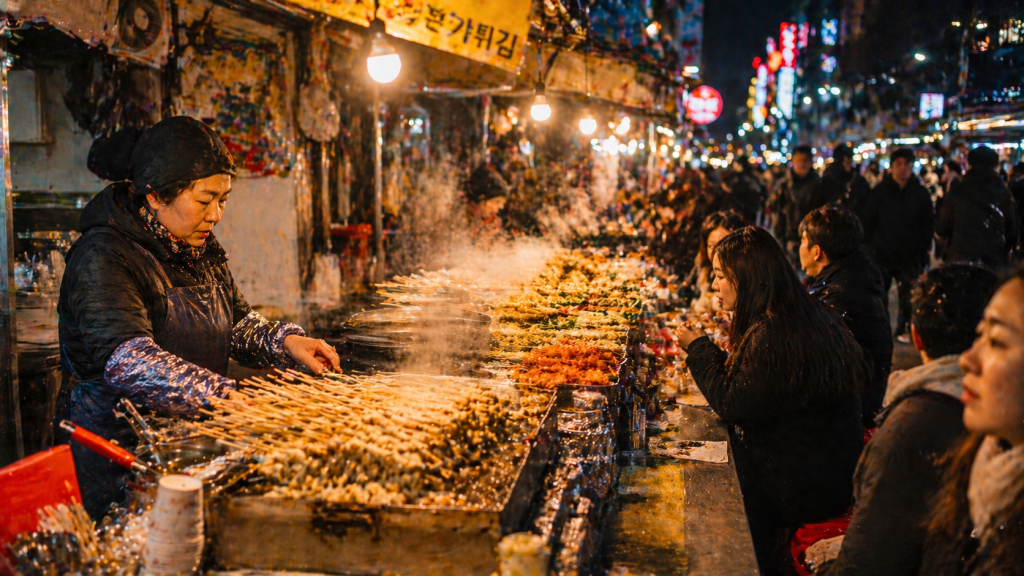
Seoul hits you with sensory overload the moment you step off the subway. The neon signs blur into a kaleidoscope of Korean characters you can’t read, the crowds move with military precision in directions you can’t predict, and the smell—that intoxicating mix of grilled meat, fermented vegetables, and street vendor magic—pulls you toward choices you’re not prepared to make. Should you trust the ajumma ladling mysterious soup from a cart, or stick to the sanitised food court in the department store basement?
I spent two weeks in Seoul making exactly these decisions, eating my way through night markets and sleeping in a Buddhist monastery that stripped away every digital distraction I’d brought with me. What I discovered was a city where the most authentic experiences cost almost nothing, but only if you know where to look and what to avoid.
Here’s what you’ll actually learn from this guide:
- Which Seoul street food markets deliver authentic flavours without the tourist markup—and which ones to skip entirely
- The six essential street foods worth hunting down, with exact prices and where to find the best versions
- What a genuine temple stay actually involves, including the 4:30 AM wake-up calls nobody warns you about
- Practical transport, accommodation, and budgeting advice from someone who tested every option
- The common mistakes that mark you as a clueless tourist (and how to blend in better)
Why Myeongdong Street Market Actually Works Despite the Tourist Crowds
Everyone warned me away from Myeongdong. “Too touristy,” they said. “Overpriced and inauthentic.” But standing there at 9 PM on a Friday, watching a vendor press a perfectly grilled scallop skewer into my hand for 5,000 KRW, I realised the critics were missing the point.
Yes, Myeongdong is packed with tourists during the day. Yes, some stalls jack up prices by 20-30% compared to local markets. But after 8 PM, something shifts. The tour groups disappear, Korean office workers emerge for dinner, and the vendors start cooking for locals, not cameras. That’s when you get the real experience—the butter-soft scallops glazed with gochujang-mayo, the hotteok pancakes crispy enough to shatter when you bite them, the tteokbokki that’s been simmering in the same pot since lunchtime.
The strategy is timing. Arrive around 7:30 PM, stake out a spot near the vendors cooking over charcoal (not the electric griddles—that’s your first clue), and follow the Koreans. If there’s a line of locals at 9 PM, you’ve found something worth waiting for.
Best Myeongdong specialities to hunt down:
- Grilled seafood skewers — Scallops, squid, prawns over charcoal. 4,000-6,000 KRW each
- Hotteok (sweet pancakes) — Filled with brown sugar, nuts, and cinnamon. 4,000 KRW, get them piping hot
- Korean corn dogs — Rolled in potato cubes or crushed ramen. Ridiculous and delicious. 5,000 KRW
- Tornado potato — Spiral-cut potato on a stick, seasoned with everything. Instagram bait that actually tastes good. 6,000 KRW
Gwangjang Market: Where Seoul Locals Actually Eat
Gwangjang Market doesn’t care if you like it. The fluorescent lights are harsh, the plastic stools are tiny, and the vendors will serve you exactly what they’ve been making for thirty years without modification or explanation. This is exactly why it’s brilliant.
I spent three mornings here testing everything I could stomach. The bindaetteok (mung bean pancakes) at stall 304 were revelatory—crispy, greasy, packed with vegetables and just enough chilli to make your nose run. 3,000 KRW for a portion big enough to share. The ajumma cooking them had been in the same spot for 15 years and spoke exactly zero English. We communicated through pointing and enthusiastic nodding.
The market operates on unwritten rules. You don’t photograph people without asking. You don’t linger if you’re not buying. You eat standing up or perched on those impossible plastic stools. You pay in cash—many vendors don’t even have card machines.
What makes Gwangjang special isn’t just the food (though the food is exceptional). It’s the complete absence of performance. Nobody’s cooking for your Instagram stories. The vendors are there to feed Korean workers who want fast, cheap, filling meals before heading to the office. You’re just lucky they’ll let you join in.
Must-try Gwangjang specialities:
- Bindaetteok — Mung bean pancakes with vegetables. 3,000-4,000 KRW
- Mayak gimbap — “Drug gimbap”—tiny rice rolls you can’t stop eating. 1,000 KRW per piece
- Sundae — Blood sausage that’s way better than it sounds. 5,000 KRW per portion
- Fresh kimchi — Sold by weight, spicier than anything you’ll find in restaurants. 2,000 KRW per 100g
Namdaemun Market: Navigation Skills Required
Namdaemun is where Seoul’s organised chaos reaches peak intensity. This market sprawls across several city blocks with no clear beginning or end, no English signage, and approximately zero consideration for overwhelmed tourists clutching Google Maps like prayer books.
I got lost here four times in one afternoon. But getting lost is almost the point. Every wrong turn revealed another cluster of food stalls, another grandmother making dumplings by hand, another vendor grilling meat over charcoal in a space barely big enough for two people. The maze-like layout forces you to slow down and actually notice what’s around you instead of rushing toward a predetermined Instagram location.
The food here trends older, more traditional, and significantly cheaper than the tourist markets. I found a stall selling enormous bowls of janchi guksu (thin noodle soup) for 4,000 KRW that would have cost double in Myeongdong. The flavours were cleaner, simpler, built around quality ingredients rather than social media appeal.
Cash is absolutely essential here. Half the vendors looked at my credit card like I’d offered to pay with seashells. The ATMs are scattered and often out of order, so load up before you arrive.
The Six Street Foods Actually Worth Hunting Down
Seoul street food guides usually list 20+ items you “must try,” which is helpful if you have unlimited stomach space and two weeks to dedicate to eating. For everyone else, here are the six dishes that consistently delivered across multiple markets and vendors.
Hotteok (Sweet Red Bean Pancakes) — 4,000-5,000 KRW
These aren’t pancakes in any Western sense. They’re more like molten sugar bombs disguised as bread. The vendor makes the dough fresh, stuffs it with brown sugar, nuts, and cinnamon, then presses it on a griddle until the outside crisps and the inside liquefies. Eat immediately or suffer third-degree mouth burns. The best version I found was at a cart outside Myeongdong Station around 8 PM—the vendor had been there for eight years and had the timing perfected.
Tteokbokki (Spicy Rice Cakes) — 5,000 KRW
This is Seoul’s comfort food: chewy rice cakes simmered in a sauce that starts sweet and ends with a chilli punch that builds slowly. Every vendor has their own twist. Some add cheese (surprisingly good), some add cream (less successful), some keep it traditional. The trick is finding sauce that’s been simmering all day—it develops complexity you can’t achieve in a quick batch. Gwangjang Market had the best traditional version, while Hongdae had the most creative variations.
Gyeran Mari (Rolled Eggs) — 8,000 KRW
Sounds boring. Tastes incredible. A vendor at Gwangjang makes these to order: whisked eggs seasoned with just salt and sesame oil, rolled into a perfect cylinder on a flat griddle. The technique looks simple but takes years to master. The eggs are creamy, slightly sweet, with a texture somewhere between scrambled eggs and French omelette. Worth the premium price for something this technically perfect.
Mandu (Dumplings) — 5,000-7,000 KRW
Get them fried, never boiled. The fried versions develop a golden crust that gives way to juicy filling—usually pork and vegetables, sometimes kimchi for extra punch. The boiled versions are fine but forgettable. Street vendors fry them in shallow oil on flat griddles, creating that perfect crispy-bottom, soft-top texture Korean dumpling experts spend years perfecting.
Korean Corn Dogs — 5,000-7,000 KRW
These have nothing in common with American corn dogs except the stick. Korean versions coat the sausage in batter, then roll it in potato cubes, crushed ramen noodles, or rice puffs before frying. The result is textural chaos that somehow works perfectly. The potato-cube version at Myeongdong creates this amazing contrast between fluffy potato exterior and juicy sausage centre.
Bungeoppang (Fish-Shaped Pastry) — 2,000-3,000 KRW
Despite the name, these contain zero fish. They’re fish-shaped pastries filled with sweet red bean paste, custard, or chocolate, made in special fish-shaped moulds. The best ones have paper-thin, crispy shells and generous filling. Street vendors make them fresh throughout the day—the smell of vanilla and toasted batter is impossible to resist.
Temple Stays: What Sleeping in a Buddhist Monastery Actually Involves
I booked two nights at Jogyesa Temple expecting Instagram-worthy meditation and spiritual awakening. What I got was a 4:30 AM bell that felt like auditory violence, 12 hours of Korean Buddhist chanting I couldn’t understand, and paradoxically, the best sleep I’d had in months.
The accommodation is monastic in the truest sense. My room contained one thin mattress on a heated floor, a tiny sink, and absolutely nothing else. No TV, no mini-fridge, no complimentary toiletries. The bathroom was shared and contained the basics: toilet, shower, mirror. The aesthetic was aggressively minimal—white walls, wooden floor, one window overlooking a small courtyard.
But here’s what nobody tells you about temple stays: the silence is addictive. After 48 hours without notifications, traffic noise, or constant stimulation, your brain starts operating differently. Thoughts slow down. You notice details—the way morning light hits the wooden floors, the sound of monks sweeping leaves, the taste of simple vegetarian food when you’re actually paying attention to it.
By day two I wasn’t checking my phone anymore. Not because it was forbidden (though phones are discouraged during ceremonies), but because I’d stopped wanting to.
The schedule is non-negotiable. 4:30 AM wake-up bell. 5:00 AM morning ceremony (one hour of chanting). 6:30 AM breakfast in silence. 9:00 AM meditation instruction. 12:00 PM lunch. 2:00 PM free time. 5:00 PM dinner. 7:00 PM evening ceremony. 9:00 PM lights out. Repeat for however many nights you’ve booked.
The Temple Stay Experience Hour by Hour
Day one started with culture shock. I arrived at 2 PM expecting a peaceful check-in process. Instead, a monk handed me a schedule in Korean and English, pointed to a room, and explained that dinner was mandatory and silent. No small talk, no orientation, no welcome orientation—just the facts.
The first meal was humbling. Vegetarian temple food served in metal bowls with specific utensils and a ritual for cleaning everything afterward. I messed up the bowl-cleaning ceremony twice. Other participants (mostly Korean, a few other foreigners) watched patiently while I figured out the proper sequence: rinse with tea, clean with radish pickle, rinse again, stack properly. Nobody corrected me directly, but the gentle demonstrations were clear enough.
Evening ceremony at 7 PM was intense. Fifty monks chanting in Korean, incense thick enough to taste, tourists and locals sitting cross-legged on wooden floors. My legs cramped after 20 minutes, but moving felt disrespectful. The chanting was hypnotic—repetitive phrases that created this meditative rhythm even if you didn’t understand the words.
By 9 PM I was unconscious. The combination of early wake-up time, minimal stimulation, and physical discomfort from floor-sitting had exhausted me completely. I slept through the night without waking—rare for me normally.
Day two felt different. The 4:30 AM bell was still jarring, but less shocking. The morning ceremony felt shorter (though it wasn’t). The silence during meals felt natural rather than awkward. Something had shifted in my brain’s processing speed.
Temple Stay Logistics: Booking and Preparation
Book through templestay.com—it’s the official programme and infinitely easier than showing up hoping for availability. Most temples offer one, two, or three-night stays. Two nights is the sweet spot: long enough to adjust to the rhythm, short enough to avoid complete culture shock.
Cost runs around 80,000 KRW per night (roughly $55-60 USD), including two meals daily. This is exceptional value considering you’re staying in central Seoul with breakfast and dinner included. Payment is usually cash-only at the temple, though some accept cards through the official booking system.
Packing requirements are minimal but specific:
- Comfortable loose clothing — You’ll be sitting cross-legged for hours. Jeans are torture.
- Socks — Shoes come off inside temple buildings. Cold floors are miserable in winter.
- Basic toiletries — Nothing provided except towels
- Meditation cushion — Optional but recommended if you have knee problems
- Cash for donation box — Not required but appreciated. 10,000-20,000 KRW is appropriate.
What not to bring: laptops, tablets, books (you won’t have time), snacks (meals are provided and outside food is discouraged), alcohol (obviously), or expectations of luxury accommodation.
Seoul Transport: Getting Around Without Going Insane
Seoul’s public transport system is brilliant once you crack the code, but that code isn’t intuitive for newcomers. The subway map looks like abstract art, bus routes make no geographical sense, and Google Maps occasionally sends you to parallel universe versions of your destination.
Start with the Airport Railroad (A’REX) from Incheon. The express takes 43 minutes to Seoul Station for 9,000 KRW. The all-stop version takes 60+ minutes but costs only 4,750 KRW. Take the express unless you’re on an extremely tight budget—the time savings are worth the extra $3.
For city transport, get a T-money card immediately. Available at any convenience store for a 2,500 KRW deposit, refillable at any subway station. Single rides cost 1,250-2,450 KRW depending on distance. The card works on subways, buses, and some taxis.
Download Naver Map, not Google Maps. Google’s Korean coverage is patchy due to government restrictions. Naver Map provides accurate transit times, walking directions, and real-time bus locations. The interface is partly Korean, but the core functionality is obvious enough for English speakers.
The subway shuts down around midnight. Plan accordingly or budget for taxi fare—Uber exists but traditional taxis are often cheaper and more available late at night.
Where to Stay: Budget to Luxury Options Tested
Seoul accommodation ranges from £20 hostels to £400+ luxury hotels, with quality varying wildly within each price tier. I tested options across the spectrum to find the genuine value picks.
| Property | Price Range (KRW) | Best For | Downsides |
|---|---|---|---|
| K-Guesthouse Myeongdong | 40,000-50,000 | Budget travellers, central location | Tiny rooms, thin walls |
| The Shilla Stay Dongdaemun | 120,000-150,000 | Modern comfort, great breakfast | Business hotel vibe, no character |
| Park Hyatt Seoul | 300,000+ | Luxury experience, city views | Expensive, removed from street life |
K-Guesthouse Myeongdong delivers exactly what budget travellers need: clean sheets, reliable wifi, and a location five minutes’ walk from the best street food. The rooms are coffin-sized and the walls are paper-thin, but you’re not here to hang out in your room. Continental breakfast is basic but adequate.
The Shilla Stay represents Seoul’s modern business hotel standard—efficient, comfortable, slightly soulless. The breakfast buffet is genuinely excellent (proper Korean options plus Western standards), rooms are spacious by Seoul standards, and the location near Dongdaemun Market is convenient for both shopping and eating.
Park Hyatt Seoul is where you go when money isn’t a consideration. The rooftop pool overlooks the city, the rooms are larger than most Seoul apartments, and the service is flawless. But you’re paying luxury hotel prices to be insulated from the authentic Seoul experience happening on the streets below.
Seasonal Considerations: When Seoul Weather Actually Matters
Seoul’s seasons are extreme enough to completely change your experience. Summer brings 35°C heat with humidity that makes street food exploration genuinely uncomfortable. Winter drops to -10°C with winds that turn outdoor eating into an endurance challenge. Spring and autumn are ideal, but they’re also when everyone else visits.
I visited in November and found the perfect balance: crisp weather that made hot street food irresistible, fewer crowds at popular markets, and temple stay conditions that were comfortable rather than stifling. The downside was shorter daylight hours—by 5:30 PM it was fully dark, which compressed sightseeing time but extended food market hours.
Summer temple stays can be miserable. The traditional buildings aren’t air-conditioned, and sitting in meditation pose while sweating through your clothes isn’t spiritually enlightening—it’s just uncomfortable. Winter temple stays require serious cold-weather gear, as the heating is minimal and you’ll spend significant time in unheated spaces.
Spring cherry blossom season (April-May) is beautiful but crowded and expensive. Accommodation prices double, popular restaurants require reservations, and the markets get uncomfortably packed. If you must visit during peak season, book everything months in advance and prepare for crowds.
Language Barriers and How to Navigate Them
Seoul operates primarily in Korean, with English signage limited to major tourist areas and high-end establishments. Street food vendors, temple staff, and local market workers often speak minimal English, which adds authenticity but requires preparation.
Learn these essential Korean phrases before you arrive:
- Kamsahamnida — Thank you. Use this constantly.
- Mae-un — Spicy. Essential for managing heat levels at food stalls.
- Eolma-yeyo? — How much? For vendors without price signs.
- Mul juseyo — Water, please. You’ll need this after the spicy food.
Google Translate’s camera function is invaluable for menus and signs. Point your phone at Korean text and get instant (usually accurate) translations. The app works offline if you download Korean language data before travelling.
For temple stays, don’t worry about language barriers during ceremonies. The rituals are primarily non-verbal, and other participants will guide you through proper etiquette without formal instruction. The spiritual aspect transcends language—you’ll understand what’s expected through observation and participation.
Common Mistakes That Mark You as a Clueless Tourist
After two weeks of trial and error, here are the mistakes that immediately identify you as someone who hasn’t done their homework:
- Visiting Myeongdong on weekends during the day — You’ll get tourist-priced food and Instagram theatre instead of authentic local culture. Go Tuesday-Thursday after 8 PM when office workers take over.
- Expecting English everywhere — Street vendors, market ajummas, and temple monks often speak minimal English. Download translation apps and learn basic Korean phrases or spend your time frustrated.
- Bringing credit cards to traditional markets — Cash is king at authentic street food stalls. Many vendors don’t even own card machines. Load up at ATMs before market hunting.
- Photographing vendors without permission — This marks you as an inconsiderate tourist. Ask first, accept “no” gracefully, and remember that some vendors prefer privacy.
- Booking temple stays without understanding the schedule — This isn’t a spa retreat. You’ll wake up at 4:30 AM, attend mandatory ceremonies, eat prescribed meals, and follow monastic rules. Come prepared mentally.
- Overdressing for street food markets — You’ll be standing, walking on wet floors, and potentially splashing sauce. Wear comfortable, washable clothes and closed-toe shoes.
Frequently Asked Questions
How much should I budget daily for street food in Seoul?
Plan 25,000-40,000 KRW ($18-28 USD) daily if you’re eating primarily street food. This covers breakfast, lunch, dinner, and snacks with room for trying specialties. High-end street food and restaurant meals will push this higher. Budget travellers can survive on 20,000 KRW daily with careful choices.
Are temple stays appropriate for non-Buddhists?
Absolutely. Temple stays welcome people of all faiths and backgrounds as cultural experiences. You’re not expected to convert or pretend to beliefs you don’t hold. Respectful participation in ceremonies is appreciated, but spiritual transformation isn’t required. Think of it as immersive cultural education rather than religious retreat.
What’s the spice level like at Seoul street food stalls?
Korean street food ranges from mild to eye-wateringly hot, often without clear indication of heat level. Start conservatively and work up. Learn “mae-un” (spicy) and “an mae-un” (not spicy) to communicate preferences. Vendors are usually happy to adjust spice levels for foreigners who ask politely.
Is Seoul street food safe for people with food allergies?
Cross-contamination is common at street food stalls, and ingredient lists aren’t readily available in English. Severe allergies require extreme caution—many sauces contain soy, sesame, or nuts without obvious indication. Consider sticking to recognizable ingredients or bringing allergy cards translated into Korean.
How do I know if a street food vendor is trustworthy?
Look for high turnover (food moving quickly), clean cooking surfaces, proper food storage at safe temperatures, and local customers. Avoid vendors with food sitting under heat lamps for extended periods or those with obviously dirty equipment. Trust your instincts—if something looks off, find another stall.
What’s the wifi situation at temples during stays?
Most temples provide basic wifi in common areas but discourage constant connectivity as part of the digital detox experience. Expect slow speeds and intermittent connections. This is partly intentional—the temple stay experience works best when you’re not constantly checking messages and social media.
Key Takeaways
- Seoul’s best street food experiences happen after 8 PM when locals take over the markets—avoid daytime tourist crowds at places like Myeongdong.
- Budget 25,000-40,000 KRW daily for authentic street food experiences, with cash essential for traditional vendors.
- Temple stays deliver genuine cultural immersion but require accepting early wake-up calls, mandatory ceremonies, and basic accommodation standards.
- Gwangjang Market offers the most authentic local experience, while Myeongdong provides tourist-friendly introduction to Korean street food.
- Learn basic Korean phrases and download Naver Map—Google’s coverage is limited and English isn’t widely spoken outside tourist areas.
- Two-night temple stays provide the optimal balance between cultural immersion and practical travel scheduling.
- Seasonal timing matters significantly—spring and autumn offer ideal weather, while summer heat and winter cold can make outdoor eating uncomfortable.
Seoul rewards travellers who embrace controlled chaos and authentic experiences over sanitised tourist attractions. The street food scene operates on its own logic, the temple stays demand genuine participation, and the city’s best moments happen when you stop trying to control every variable and start following your nose toward the next great meal.